
Pentesting, Ethical Hacking, SOC, Network Security, Privacy, GRC, AppSec, AI, IoT, OT

Cybersecurity Club is a free learning community for people at every experience level, from beginners to seasoned professionals.
Members gain access to learning resources, networking opportunities, and hands-on workshops while connecting with others who share similar goals.
Top Topics in the Club: 2026 Insights
We conducted research to understand which cybersecurity topics matter most to our community. The results reveal where members are actively learning, building skills, and exploring career paths.
If the topics below interest you and you are not yet a member, you are invited to join Cybersecurity Club and be part of the community!
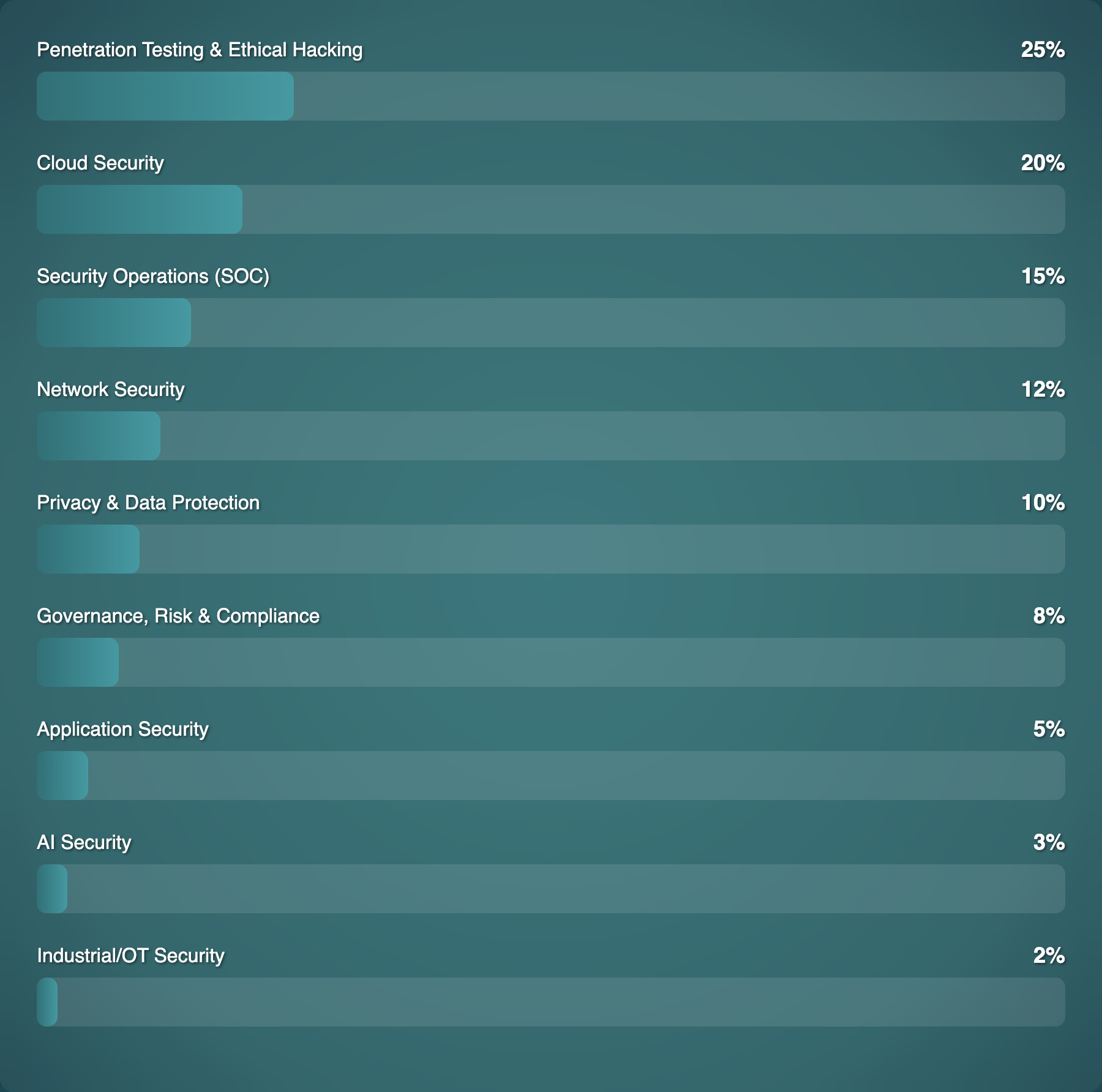
Penetration Testing & Ethical Hacking (25%)
This is our most popular interest area, with members actively working on platforms like HackTheBox and TryHackMe to build hands-on skills. The focus includes learning tools like Kali Linux, Metasploit, and various exploitation frameworks to identify vulnerabilities in systems. Many aspiring penetration testers and bug bounty hunters are looking to turn this passion into a career by participating in CTF competitions and building practical experience.
Cloud Security (20%)
Cloud security is experiencing rapid growth as more organizations migrate to AWS, Azure, and Google Cloud platforms. Members are pursuing certifications like CCSP and learning to secure cloud infrastructure, implement identity and access management, and understand cloud-native security tools. This area attracts both traditional IT professionals transitioning to cloud roles and those starting fresh in the modern security landscape.
Security Operations (SOC) (15%)
SOC analyst roles represent a major entry point into cybersecurity careers, and many members are focused on threat detection, log analysis, and incident response. The interest includes learning SIEM tools, understanding attack patterns, and developing the skills to monitor and defend organizational networks. This smaller but dedicated group recognizes SOC work as essential defensive security that protects organizations from real-world threats.
Network Security (12%)
Network security provides the foundation for understanding how systems communicate and where vulnerabilities exist in that communication. Members working toward CCNA and Network+ certifications see this as essential knowledge that supports all other security domains. The focus includes routing, switching, firewall configuration, and understanding network protocols at a deep level.
Privacy & Data Protection (10%)
Privacy advocates in our community are passionate about personal digital rights and the de-Googling movement. They focus on implementing privacy-preserving technologies like Proton services, VPNs, encrypted communications, and self-hosting solutions. This group often overlaps with those concerned about surveillance, data collection, and maintaining individual autonomy in an increasingly connected world.
Governance, Risk & Compliance (8%)
GRC professionals bring 5-10 years of experience working with frameworks like NIST, ISO 27001, SOC 2, and industry-specific regulations. They are often pursuing or have earned certifications like CISSP and work on risk assessments, policy development, and audit preparation. This group values the strategic side of security, ensuring organizations meet regulatory requirements while maintaining effective security programs.
Application Security (5%)
Application security specialists focus on securing the software development lifecycle and identifying vulnerabilities in code before deployment. This includes web application security, API security, secure coding practices, and understanding common vulnerabilities like those in the OWASP Top 10. Members in this area often have development backgrounds and are interested in bridging the gap between security and software engineering.
AI Security (3%)
This emerging field attracts research-oriented members interested in LLM security, AI alignment, prompt injection attacks, and jailbreaking techniques. The focus includes understanding how AI systems can be manipulated, securing AI-powered applications, and exploring the intersection of machine learning and cybersecurity. This cutting-edge area is growing rapidly as AI becomes more integrated into business systems and daily life.
Industrial/OT Security (2%)
Though a smaller niche, industrial and operational technology security is critical for protecting manufacturing, SCADA systems, and critical infrastructure. Post-Stuxnet awareness has driven interest in securing systems that control physical processes and understanding the unique challenges of IT/OT convergence. Members in this area often work in manufacturing or energy sectors where security failures can have real-world physical consequences.
Member Breakdown by Interest:
Penetration Testing & Ethical Hacking: 25%
Cloud Security: 20%
Security Operations (SOC): 15%
Network Security: 12%
Privacy & Data Protection: 10%
Governance, Risk & Compliance: 8%
Application Security: 5%
AI Security: 3%
Industrial/OT Security: 2%
Join Cybersecurity Club
Don’t miss out on the chance to be part of a passionate, diverse, and growing cybersecurity community.
Whether you’re here to learn, share, or connect, we’re excited to welcome you aboard. Click the button below and start your cybersecurity journey with us today!